Prevention
Dental floss or interdental brushes: how to clean between your teeth
A toothbrush does not clean the spaces between the teeth. Floss, interdental brushes, water flosser: which to choose, how to use them and the mistakes that irritate the gum.

Reviewed by Dr Badr Salhi, dental surgeon
Published on 10 November 2026 · 8 min read
A toothbrush, even when used well, does not reach the surfaces of the teeth that touch each other. That is where plaque stays, where decay between two teeth forms and where the gum becomes inflamed first. Dental floss and interdental brushes are used to clean these spaces. This guide helps you choose the right tool for your teeth, use it without damaging the gum and fit it into your routine.
Contents
Why clean between your teeth?
The brush cleans the outer and inner surfaces and the chewing surface well. On the hidden surfaces between two teeth, plaque builds up, hardens into tartar and irritates the gum. The British NHS points out that regular flossing may reduce gum disease, tooth decay and bad breath, by removing the plaque that forms along the gum line.
Cleaning between your teeth every day helps prevent:
- decay between two teeth, often found late, on an X-ray;
- gingivitis, then periodontitis;
- bad breath, a common cause of which is plaque trapped between the teeth.
Floss or interdental brushes: which to choose?
Both remove plaque; the right choice depends on the size of the spaces between your teeth.
| Dental floss | Interdental brushes | |
|---|---|---|
| Spaces | Tight teeth, very narrow spaces | Visible spaces, receding gums |
| Ease of use | Takes a little practice | Easier to handle for many people |
| Bridge, implants, braces | Special floss with a stiff end | Suitable brushes, often more practical |
| After gum treatment | Less suited to widened spaces | Often recommended |
The NHS presents both as options: interdental brushes can be used instead of floss, especially when there are gaps between the teeth. Many people use both: brushes where they fit, floss where the teeth are tight.
How to use dental floss
- Take about 40 cm of floss and wind it around your middle fingers, leaving a few centimetres between them.
- Slide it gently between two teeth, moving it back and forth, without snapping it onto the gum.
- Curve it into a C shape against one tooth and move it up and down along its surface, to just below the gum.
- Do the same against the neighbouring tooth, then move to the next space with a clean section of floss.
The NHS advises flossing preferably before brushing. Floss holders, small plastic handles, help if you have trouble reaching the back teeth.

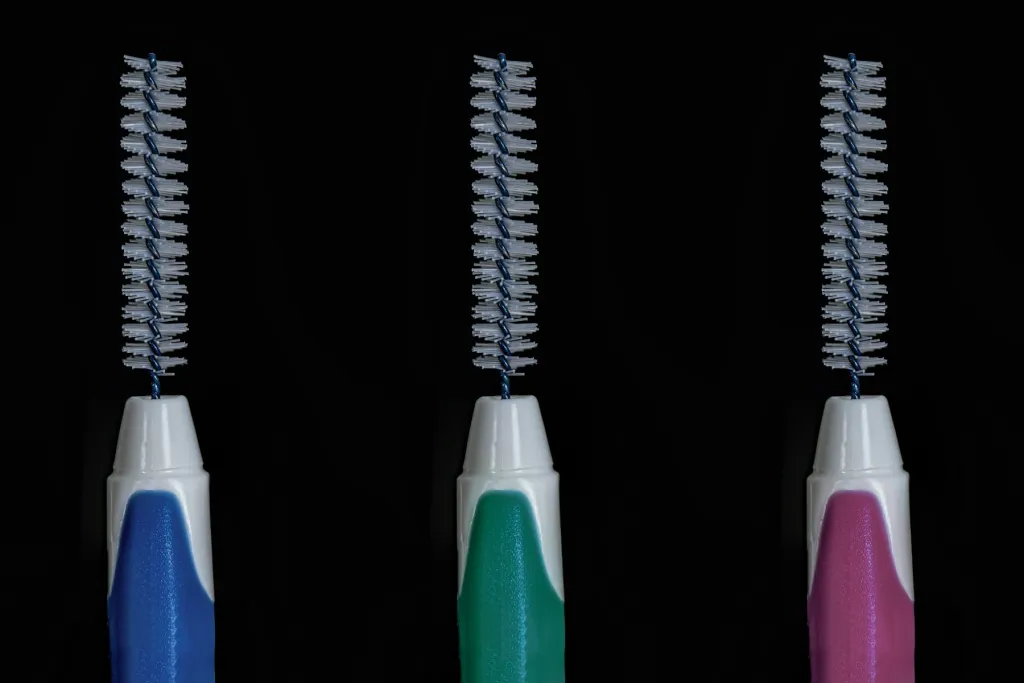
How to use interdental brushes
- Choose the right size: the brush should fill the space and rub lightly, without forcing. The same mouth often needs two or three sizes; at the practice, we show you the ones that suit your spaces.
- Go in gently, horizontally, following the gum, then make a few back-and-forth movements.
- Never force it: if the brush does not fit, use a thinner size, or floss.
- Rinse it after use and replace it as soon as the bristles flatten or the wire bends.
Good brushing habits
Cleaning between the teeth complements brushing, it does not replace it:
- brush your teeth twice a day, for about two minutes, including in the evening before bed;
- use a fluoride toothpaste: for adults, the NHS recommends at least 1,350 ppm of fluoride (the content is shown on the tube);
- after brushing, spit out the excess toothpaste without rinsing with water: the fluoride keeps working;
- choose a soft brush and brush gently along the gum;
- replace your toothbrush, or electric brush head, about every three months, or sooner if the bristles splay.
Electric or manual toothbrush?
According to the NHS, both are fine, as long as you clean all the surfaces of all your teeth with a fluoride toothpaste. Some people find it easier to brush thoroughly with an electric toothbrush, for example with braces or when hand movements are less precise.
And mouthwash?
It replaces neither brushing nor cleaning between the teeth. A fluoride mouthwash can help prevent tooth decay; use it at a different time from brushing, for example after lunch, so as not to rinse away the fluoride from the toothpaste.
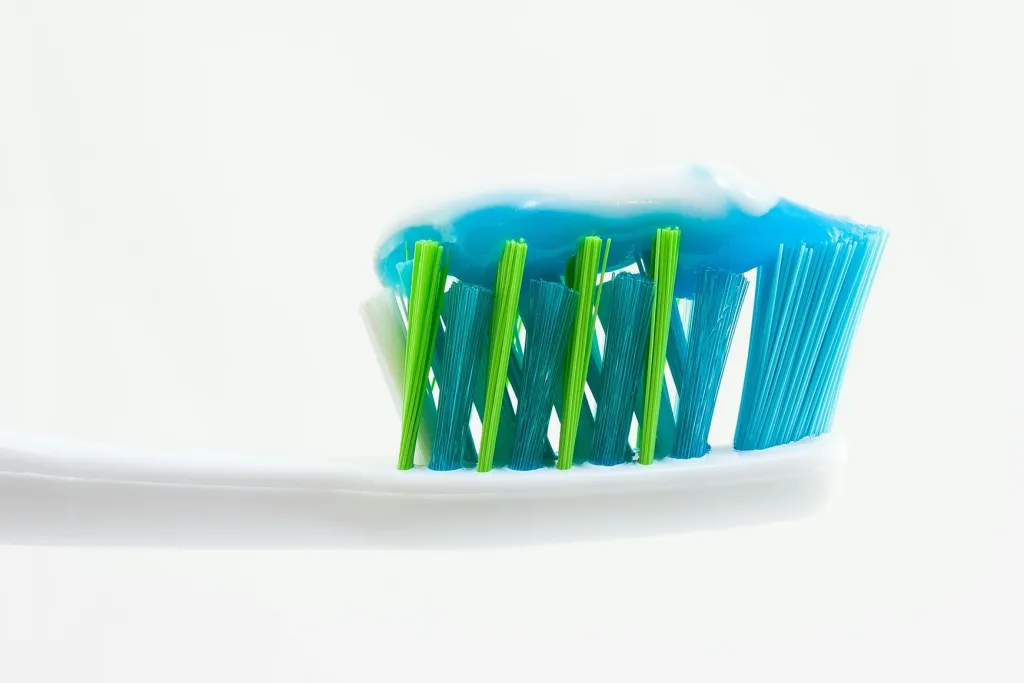
On video: brushing your teeth properly
This animation shows how to hold the brush along the gum line and the order to follow so that every surface of the teeth is cleaned.
Children: the right habits for each age
According to the French national health insurance, Assurance Maladie (page in French), brushing starts with the first teeth, at around 6 months, with a suitable brush and a smear of toothpaste. A parent brushes the child’s teeth morning and evening, at least until the age of 6. At around 6, the first permanent teeth come through: the child can then brush alone, supervised by an adult until the age of 9. The fluoride content of the toothpaste depends on age: ask the dentist.
Cleaning between the teeth is learned later, with a technique suited to the child’s age and the space between the teeth: it is shown to you at check-ups. The children’s dentist page explains how visits for the youngest patients go.
Mistakes to avoid
- Wooden toothpicks, which can injure the gum: the NHS does not advise them.
- Forcing a brush that is too big, which irritates the gum.
- Snapping the floss onto the gum instead of sliding it in gently.
- Stopping because the gum bleeds: in the first few days, slight bleeding is common when the gum is inflamed. It usually decreases within one to two weeks of regular cleaning; if it persists, see a dentist.
With braces, a bridge or implants
- Braces: thin interdental brushes under the wire and a suitable toothbrush; our article on orthodontics for teenagers explains care during treatment.
- Bridge: a floss with a stiff end goes under the false tooth to clean it.
- Implants: suitable interdental brushes around each implant; the gum around an implant needs the same care as around a natural tooth.
The check-up at the practice
Even with good habits, tartar forms in hard-to-reach areas. A check-up and a scale and polish once or twice a year remove it and check the condition of the gums. The French Assurance Maladie (page in French) advises a dental check-up at least once a year. At the CaliSmile Dental Centre, in the Californie district, this appointment is also a chance to show you the habits and interdental brush sizes suited to your mouth. If your gums have been bleeding for several weeks, the gum treatment page explains the assessment offered.
Frequently asked questions about dental floss and interdental brushes
How long should I brush my teeth for?
About two minutes, twice a day, including in the evening before bed, with a fluoride toothpaste. Cleaning between the teeth comes on top of this brushing.
Electric or manual toothbrush: which should I choose?
Both are fine, as long as every surface of every tooth is cleaned. An electric toothbrush can help with braces or when hand movements are less precise.
Should I floss every day?
Yes, once a day, preferably in the evening. Doing it regularly matters more than how long it takes.
Floss before or after brushing?
The NHS advises flossing preferably before brushing. The key is to do it every day.
Can interdental brushes replace dental floss?
Yes, where they fit between the teeth, especially when there are gaps. Where the teeth are very tight, floss remains useful.
Why do my gums bleed when I floss?
Most often because they are inflamed by plaque. The bleeding usually decreases within one to two weeks of gentle, regular cleaning. If it continues, a check-up is useful: our article on bleeding gums sets out the causes.
Does a water flosser replace floss?
It helps dislodge debris, especially around braces, a bridge or implants, and can complement floss or interdental brushes. Ask us whether it suits your mouth.
Which size of interdental brush should I choose?
The one that fills the space without forcing. The spaces are not all the same width: two or three sizes are often needed. At the check-up, we tell you the sizes that suit you.
This article gives general information; it does not replace a consultation.