Implants
Getting dental care in Morocco while living in France: how to plan
Which treatments fit into a holiday stay, which need two trips, what to send before you come and how to keep consistent follow-up with your dentist in France.

Reviewed by Dr Badr Salhi, dental surgeon
Published on 16 September 2026 · 8 min read
For many Moroccans living in Europe, holidays back home are an opportunity to look after their teeth. Dental care in Morocco goes well when it is prepared: not all treatments fit into a stay of two or three weeks, and what follows must be possible once you are back. Here is how to organise yourself, from remote preparation to follow-up in France.
Contents
Why prepare your treatment in advance
A holiday stay has an end date, and teeth have their own timetable: a root canal treatment takes one or two appointments, a crown one to two weeks of laboratory work, an implant several months of healing. Without preparation, you risk starting a treatment you cannot finish before leaving, or finishing it too quickly. Preparing your dental care in Morocco a few weeks before arriving lets you know what is realistic, book the right slots and enjoy the rest of your holiday. It also avoids having to cut short a family visit or an outing for an unplanned appointment.
What fits into a single stay
Some dental care is completed in one to a few appointments, over one or two weeks:
- a check-up and scale and clean, in one appointment;
- treatment of cavities, usually one appointment per tooth;
- a root canal treatment, in one or two appointments;
- a crown or bridge, in two appointments one to two weeks apart for laboratory work;
- veneers, in three appointments over about three weeks;
- whitening, one appointment at the practice then two weeks of trays at home;
- a simple extraction, with a check-up a few days later.
The longer your stay, the easier it is to fit several of these treatments in. The dates of your appointments are set at the first examination, according to your return date.
What needs two trips
Other treatments need time to heal or to progress:
- implants: the crown is fitted three to six months after the implant (see our article a dental implant in Morocco while living in Europe);
- dentures after extractions: an immediate denture, then a final denture or relining once the gum has healed (see dental prosthesis in Morocco: planning your stays);
- orthodontics with aligners: six to eighteen months, with regular check-ups, which means frequent stays or someone to take over locally;
- gum treatment: a reassessment one month after the deep cleaning appointments.
These treatments remain possible, provided the timetable is planned from the start.
The table: dental care, appointments and stay
| Treatment | Appointments | Stay to plan |
|---|---|---|
| Check-up and scale and clean | One | A few days |
| Treatment of cavities | One per tooth, as a rule | One week |
| Root canal treatment | One or two | One week |
| Crown or bridge | Two, plus a check-up | Two to three weeks |
| Ceramic veneers | Three | About three weeks |
| Whitening | One, then trays | Two weeks |
| Removable denture | Four to five | Four to six weeks |
| Implant | Placement, then crown | Two stays, three to six months apart |
These durations are indicative and assume that any preliminary treatment is done at the start of the stay.
How long to plan on site
For simple dental care, such as a check-up, a scale and clean and a few cavities, a week is enough. Seeing a dentist during the holidays simply takes a little planning. For a crown, veneers or several treatments in a row, allow two to three weeks. A few simple tips:
- come to the practice at the start of your stay, not in the last few days: that is what leaves time to finish and check;
- book early for the summer: July and August are the busiest months for patients who live in Europe;
- keep a few days in hand before leaving, for a check-up or an adjustment.

Before you leave: what to send
A few weeks before you arrive, send by WhatsApp:
- your recent X-rays, if you have any;
- the list of your medicines and allergies;
- a description of what bothers you, with a photo if it is visible;
- your travel dates;
- the report of your last treatment, if a treatment is under way in France.
The practice then tells you which treatments can be considered during your stay and how much time to set aside for the first consultation. The final plan and price are drawn up after the examination on site.
On site: a written plan before starting
The first consultation lasts 45 minutes. Dr Salhi examines you, takes the necessary X-rays, then explains the treatment plan and the price. You know exactly what will be done, in what order, and what it costs, before any treatment.
The plan’s priorities
Dental care is ranked in order of priority, so that you can choose what you do during this stay:
- emergencies: pain, an infection, a broken tooth;
- treatment that cannot wait: deep cavities, bleeding gums;
- restorative treatment: crowns, bridges, dentures;
- treatment that can be scheduled later: cosmetic work, orthodontics, replacing old fillings.
Be wary of a plan that wants to do everything in a few days: treatment suited to your mouth respects healing times.
On video: how a scale and clean is done
A check-up and scale and clean are the most frequent dental care during a stay. This educational animation shows how tartar is removed, above and below the gum.
During your stay: good habits
- After an anaesthetic, wait until the numbness wears off before eating, so as not to bite your cheek.
- After an extraction, avoid hot drinks, smoking, physical effort and swimming on the first day, and follow the written instructions.
- In the heat, drink water regularly: a dry mouth encourages cavities and bad breath.
- Keep your toothbrush in your hand luggage if you travel a lot during the stay: sweets at celebrations and family visits are frequent.
In case of pain or a broken tooth outside your appointments, our article dental emergency in the evening gives the first steps.
Back home: keeping consistent follow-up
Before leaving your dentist in Casablanca, ask for:
- the report of the treatment carried out;
- the X-rays;
- for an implant, its references (brand, diameter, length);
- a detailed invoice, procedure by procedure.
Your dentist in France can then provide follow-up or step in if needed.
What about reimbursement?
For dental care in Morocco, the rules for cover depend on your situation, your insurance fund and your top-up insurance. The social security agreement between France and Morocco, presented by CLEISS (page in French), notably covers immediate care that becomes necessary during leave in your home country; planned treatment in principle requires your fund’s prior approval. The French Assurance Maladie (page in French) also states that, in a country outside the European Union such as Morocco, only urgent and unforeseen care may possibly be covered on your return. Check before you leave, and keep the detailed invoice: it is the document you will be asked for.
Documents in French
Consultations take place in French or Arabic, and the documents you are given (treatment plan, report) are written in French: your dentist in France can read them directly. The report lists the teeth treated, the materials used and, where relevant, the treatment still to be done.
Preparing your stay
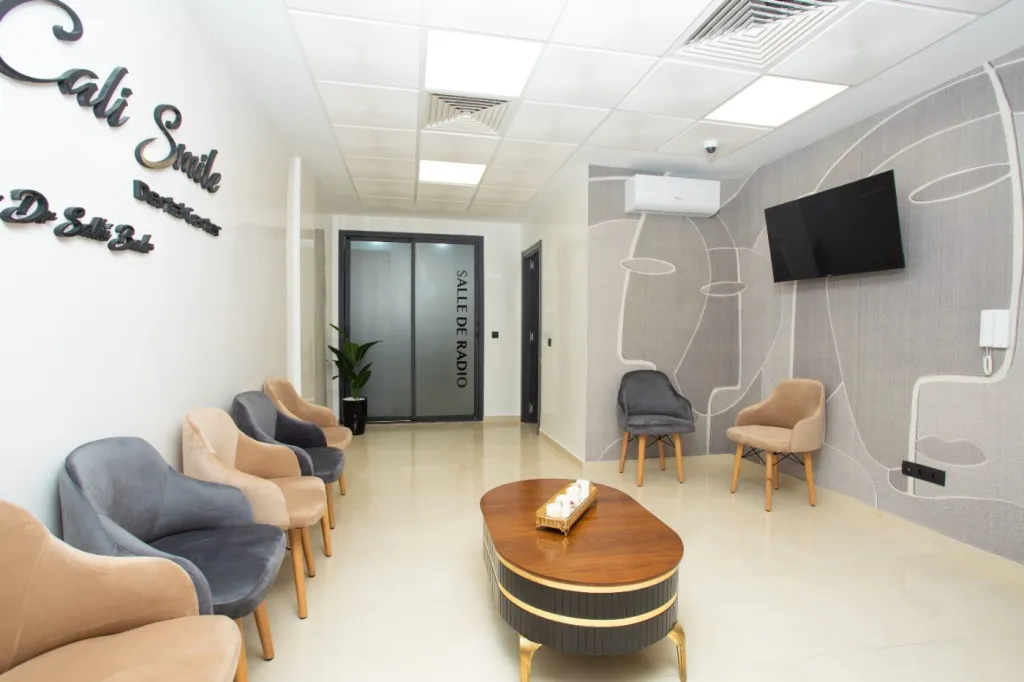
All the practical information, from the airport to the practice, is gathered on the Patients from Europe page. For indicative amounts for dental care in Casablanca, see the Prices page. And for the first visit, the Your first visit page describes how it unfolds, minute by minute.
Frequently asked questions about dental care in Morocco
Can several dental treatments be done during the same stay?
Yes, if they are planned from the first examination. A check-up, a scale and clean, cavities and a crown often fit into a stay of two to three weeks. The written plan sets the order and dates of the appointments.
How far ahead should I book?
For the summer, two to four weeks before you arrive, ideally sending your X-rays and dates. For the rest of the year, a few days are often enough.
Can I start treatment in Morocco and finish it in France?
It is possible for some treatments, such as a root canal treatment followed by a crown, provided both practitioners are informed. The report given to you before you leave allows your dentist to take over the treatment.
What should I do in a dental emergency during the holidays?
Call the practice or write on WhatsApp describing the pain. Emergencies are seen as a priority, on call, seven days a week: outside practice hours, until 1 am.
How are instruments sterilised?
Instruments are cleaned, packaged and sterilised in an autoclave after each patient, in a dedicated sterilisation room, and single-use items are thrown away after use.
Can children be treated during the stay?
Yes, a check-up and routine treatment for children can be done during the holidays. Mention it when booking so that a suitable slot can be planned.
Should I bring my X-rays?
If you have recent ones, yes: they sometimes avoid having to take new ones and allow a first remote opinion. Otherwise, the necessary X-rays are taken at the practice.
This article gives general information; it does not replace a consultation.