Implants
Dental prosthesis in Morocco: planning your stays from Europe
How many appointments, how many days on site, what to do if teeth need extracting, and how to avoid leaving with a prosthesis that has not yet been adjusted.

Reviewed by Dr Badr Salhi, dental surgeon
Published on 10 September 2026 · 9 min read
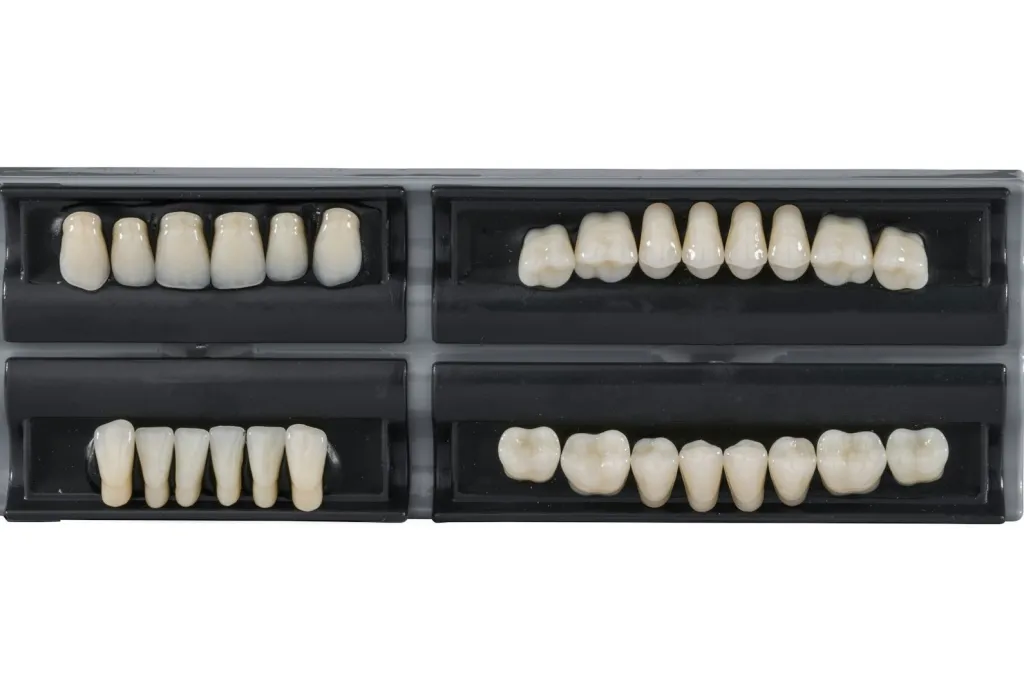
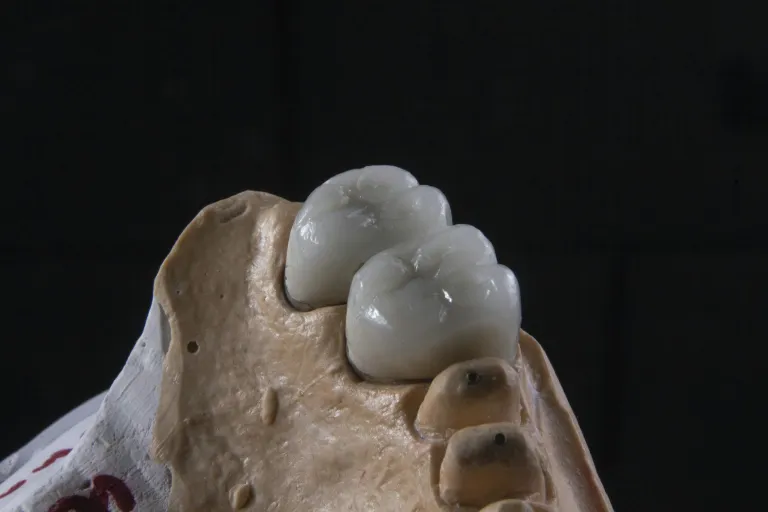
Having a dental prosthesis made in Morocco during a stay is a common plan for people who live in Europe. The difficulty is not making it, but the timetable: a prosthesis is built over several appointments, and it has to be adjusted after a few days of use. Here is how to plan your stays so that you leave with a comfortable prosthesis, depending on the type of dental prosthesis and your situation.
Contents
Which prosthesis, which stay: the table
| Type of prosthesis | Appointments | Recommended stay | Number of stays |
|---|---|---|---|
| Crown or bridge | Two, plus a check-up | Two to three weeks | One |
| Removable partial denture | Four to five | Four to six weeks | One, or two shorter ones |
| Removable complete denture | Four to five | Four to six weeks | One, or two shorter ones |
| Prosthesis after extractions | Immediate then final denture | Variable | Usually two |
| Implant-supported prosthesis | Implant placement then prosthesis | Ten days then one to two weeks | Two, sometimes three |
These durations are indicative: the written plan, drawn up after the examination, sets the timetable suited to your mouth.
How many appointments for a prosthesis?
The number of appointments depends on the type of dental prosthesis:
- removable partial or complete denture: four to five appointments (impressions, bite registration, try-in of the teeth, fitting), over three to six weeks;
- crown or bridge: two appointments, one to two weeks apart for laboratory work;
- implant-supported prosthesis: two stays, because the final prosthesis is only fitted after three to six months of bone healing.
These timescales take into account the laboratory’s work and the time needed between two stages. Shortening them too much often results in a prosthesis that fits less well.
Why it cannot all be done in a few days
Each stage of a dental prosthesis checks the previous one. The first impressions give the general shape; the second, more precise ones record the details of the gum. The bite registration positions the two jaws in relation to each other. The try-in of the teeth set up in wax makes it possible to correct the shade, shape, length and position before finishing. Between each appointment, the laboratory needs a few days. Skipping a stage means risking a prosthesis that hurts or moves.
When teeth need extracting
If teeth have to be removed before the dental prosthesis, the gum and bone reshape over several months. There are two approaches:
- an immediate denture is prepared before the extractions and fitted the same day: you are never without teeth. It will need relining, or even remaking, once healing is complete;
- a delayed denture is made after a few weeks to a few months of healing: it fits better, but you have to wait.
For a patient living in Europe, an immediate denture at the first stay, followed by relining or a final denture at the next stay, is often the most practical solution.
Allow time for adjustments
A new removable denture almost always needs one or two adjustments in the days after fitting: an area that rubs, a pressure point on the gum. These adjustments are quick, but you need to still be on site.
Leave at least a week between fitting the dental prosthesis and your departure: that is the time it takes to spot and correct small discomforts.
Typical timetable: a removable denture
- Week 1: first consultation, examination, plan and price explained; preliminary treatment if a tooth needs treating; first impressions.
- Weeks 2 to 3: precise impressions, bite registration, try-in of the teeth set up in wax. This is the time to approve the shade and shape with you.
- Week 4: fitting of the denture and advice on use.
- Week 5: adjustments and check-up before departure.
A stay of four to six weeks therefore allows a removable denture to be made in good conditions. For a shorter stay, it is possible to start with the preliminary treatment and finish the denture at the next stay.
Typical timetable: crowns or a bridge
- First appointment: examination, X-rays, plan and price; preparation of the teeth, impression and fitting of temporaries.
- One to two weeks later: try-in, adjustment and cementing of the crowns or bridge.
- A few days afterwards: check of the bite and comfort.
A stay of two to three weeks is usually enough, provided the teeth involved do not need root canal treatment first, which would add appointments.
Typical timetable: an implant-supported prosthesis
- First stay, about ten days: examination, 3D X-ray, implant placement, healing check. Your current denture, or a temporary one, is adapted for the healing period.
- Three to six months at home: the bone fuses with the implants.
- Second stay, one to two weeks: impressions, try-in, fitting of the prosthesis clipped or fixed onto the implants, then adjustments.
Our article a dental implant in Morocco while living in Europe details this two-stay timetable.
Before you come
Send by WhatsApp:
- a photo of your current denture if you have one, worn and out of the mouth;
- your recent X-rays;
- the list of your medicines and medical history;
- your possible travel dates.
The practice tells you whether the timetable is realistic and what can be done during your stay. The final plan is drawn up after the examination.

During your stay: practical tips
- Book your appointments as soon as you arrive, or even before, to fit in with the laboratory’s schedule.
- Avoid planning a trip far from Casablanca in the days after fitting: that is when adjustments happen.
- A dental prosthesis during the holidays is compatible with the beach and outings; it is mainly meals in the first few days that need attention: soft food, small mouthfuls.
- Keep your old dental prosthesis, if you have one: it can serve as a spare.

On video: cleaning and caring for dentures
This educational animation shows how to clean a complete removable denture and look after it day to day.
Back in Europe
The gum and bone keep changing after teeth are lost: a removable denture must be checked and sometimes relined over time. This follow-up can be done at the practice during a later stay, or with your dentist in Europe, to whom you pass on the report given to you before you leave.
Day to day, brush the dental prosthesis every evening over a basin filled with water, with a dedicated brush and mild soap, and brush your gums and remaining teeth too. If a sore spot appears, take the denture out for a few hours and see a dentist: never adjust it yourself.
What about reimbursement?
For France, the Assurance Maladie (page in French) states that, in a country outside the European Union such as Morocco, only urgent and unforeseen care may possibly be covered on your return, with specific arrangements for a stay in your country of origin. A dental prosthesis in Morocco, planned in advance, does not usually fall into this category. The social security agreement between France and Morocco, presented by CLEISS (page in French), notably covers immediate care that becomes necessary during leave in your home country; planned treatment in principle requires your fund’s prior approval. Check with your insurance fund and top-up insurer, and ask for a detailed invoice, procedure by procedure.
Further reading
If you are hesitating between several solutions, our article fixed or removable prosthesis helps you compare, and our article implant or bridge compares the two fixed options. The full process of a removable denture in Casablanca is described on the Removable dentures page, indicative amounts on the Prices page, and practical travel information on the Patients from Europe page.
Frequently asked questions about a dental prosthesis in Morocco
Can a dental prosthesis be made in a week?
It is not advisable: a removable denture needs four to five appointments, with laboratory work between each, then adjustments after fitting. A stay of four to six weeks, or two shorter stays, gives a more comfortable result.
What if I only have two weeks on site?
The first stay can be used for the examination, preliminary treatment and impressions; the denture is then finished at the next stay. The written plan specifies what can be done in the time you have.
Can teeth be extracted and can I leave with a denture?
Yes, with an immediate denture, fitted on the day of the extractions. It will need relining or remaking after healing, during a later stay or with your dentist in Europe.
Will my dentist in Europe be able to adjust the denture?
Yes, an adjustment or relining can be done by any dentist. The report given to you before you leave describes the prosthesis and the treatment carried out.
Should an old dental prosthesis be remade or can it be repaired?
It depends on its condition: a broken tooth or clasp can often be repaired, and a denture that moves can be relined. A very worn or ill-fitting denture is remade. The examination decides.
Can I eat normally with a removable denture?
After a few weeks of adjustment, most foods become possible again. In the first few days, choose soft food cut into small pieces, and chew on both sides.
How much does a dental prosthesis cost in Morocco?
The amount depends on the type of prosthesis, the number of teeth and any preliminary treatment. Indicative prices are shown on the Prices page, and the price is explained to you after the examination, before any treatment.
This article gives general information; it does not replace a consultation.