Emergencies
Broken tooth: what to do in the first hour
A chip, a fracture, a cracked tooth or a knocked-out tooth: what to do straight away, how to keep the piece, when to call and how the tooth is repaired.

Reviewed by Dr Badr Salhi, dental surgeon
Published on 30 September 2026 · 9 min read

A broken tooth always comes as a surprise: a fall, a knock during sport, an olive stone bitten by mistake. What you do in the first hour matters, especially if the tooth has come right out of the mouth. This guide helps you recognise the situation, take the right steps and understand how the tooth can be repaired.
Contents
First step: look at what has happened
Rinse your mouth gently with warm water, then look in a mirror. Three situations are the most common:
- a chip: a small piece of enamel is missing, the edge of the tooth feels rough;
- a deeper fracture: a large piece has come off, the tooth is sensitive to cold or air, and you sometimes see a pink or red spot;
- a knocked-out tooth: the tooth has come out whole, with its root.
If you have had a violent blow to the face, also check that you have not lost consciousness and have no nausea or pain in the jaw: these signs come before the tooth and call for the hospital emergency department.
The different types of broken tooth
Not all broken teeth are alike, and the treatment depends on how deep the damage goes.
Superficial enamel cracks
Fine vertical lines, often visible in the light on the front teeth. They only affect the enamel, do not hurt and usually only need monitoring.
A chip of enamel
A small piece breaks off, most often at the edge of an incisor. The tooth is not sensitive, because the inner layer is not exposed. Polishing or a little composite is often enough.
A fracture that reaches the dentine
Beneath the enamel lies the dentine, softer and sensitive. When it is exposed, the tooth reacts to cold, heat and air. It needs to be protected quickly to stop the nerve becoming irritated.
A fracture that exposes the nerve
A red or pink spot appears in the middle of the break: this is the pulp, the nerve of the tooth. The pain is sharp. This is a broken tooth to be seen the same day, to protect the nerve or treat it.
A root fracture
The break is below the gum and cannot be seen. The tooth may move slightly or hurt when you bite. Only an X-ray can locate it, and the solution depends on where it is.
A knocked-out or displaced tooth
The tooth has come out of its socket, or it has been pushed in, forwards or backwards. This is the emergency where every minute counts, for a permanent tooth.
If a piece of tooth has broken off
- Recover the fragment if it is intact: in some cases, it can be bonded back.
- Keep it in a little milk or saline solution, or failing that in your saliva. Do not let it dry out. The French Assurance Maladie (page in French) also recommends milk or saline.
- Protect the area: if the edge cuts your tongue, cover it with a piece of sugar-free chewing gum or orthodontic wax in the meantime.
- Ease the pain with your usual painkiller, according to the leaflet, and avoid hot and cold.
- Call the practice for a quick appointment, the same day if the tooth hurts.
Even when a broken tooth does not hurt, the exposed part is more fragile and stains or cracks more easily. Protection placed in the following days stops a small chip from turning into a deeper fracture.
If the tooth has come right out
For a knocked-out permanent tooth, time is critical: the sooner it is put back, the better its chances of reattaching.
- Hold the tooth by the crown, the white part, never by the root. This is also the NHS‘s advice.
- If it is dirty, rinse it for a few seconds under cold water, without rubbing or brushing it.
- If you can, put it back in its socket, the right way round, then bite gently on a tissue to hold it in place.
- Otherwise, keep it in milk or in your mouth, between your cheek and your teeth, without swallowing it.
- Call immediately: ideally, you should be seen within the hour.
Do not let it dry in a tissue and do not keep it in tap water: the cells that help it reattach are quickly damaged.
A knocked-out baby tooth is not put back: it could damage the permanent tooth forming underneath. See a dentist all the same to check the gum.
A cracked tooth
A cracked tooth cannot always be seen. It shows up as a sharp, brief pain when you chew, or when you release the pressure, on a tooth that looks intact. The crack can spread over time. Avoid biting on that side and make an appointment: an examination and an X-ray locate it, and a crown often protects the tooth before it splits. A cracked tooth treated early can usually be kept; a crack that reaches the root, however, cannot be repaired.
On video: the different types of broken tooth
This educational animation shows cracks and fractures, and what they mean for the tooth.
The most common causes
Knocks and falls
A fall, an accident, a ball to the face, contact sport without protection: in children as in adults, knocks cause most knocked-out or displaced teeth.
Hard foods and bad habits
Olive stones, bones, hard sweets, ice cubes: a healthy tooth can give way on something very hard, especially if it already has a large filling. Opening a bottle or tearing packaging with your teeth carries the same risks.
Grinding your teeth
Clenching or grinding your teeth at night puts considerable force on them, repeated thousands of times. The teeth wear, crack, and older fillings weaken.
A tooth that is already weakened
A deep cavity, a large filling or a root-treated tooth without a crown: the remaining structure is thinner, and a broken tooth sometimes happens with an ordinary movement.
How the dentist repairs a broken tooth
Bonding the fragment back
If the piece is intact and well kept, it can sometimes be bonded back onto the tooth. This is the option that keeps the most natural tooth.
Rebuilding with composite
Composite, matched to the colour of the tooth, rebuilds the missing part in one appointment. It suits chips and limited fractures.
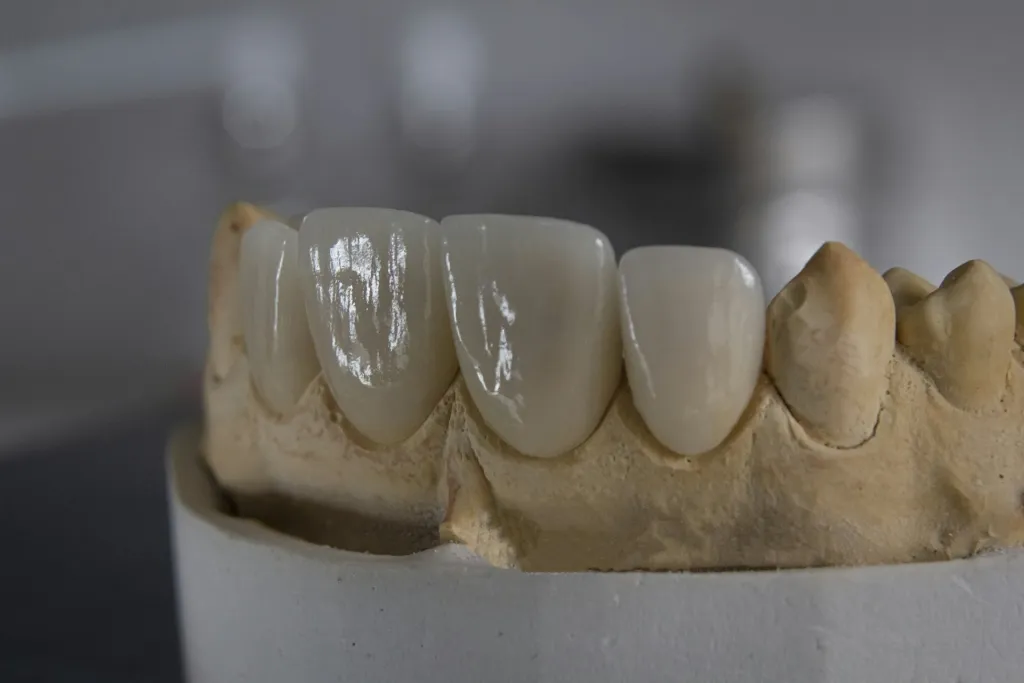
Protecting with a veneer or a crown
For a front tooth broken over a large area, a ceramic veneer can restore its shape. When much of the tooth is lost or it is cracked, a crown surrounds and protects it.
Treating the nerve
If the nerve is exposed or has become infected after the knock, root canal treatment comes before the rebuilding.
When the tooth cannot be kept
A vertical root fracture cannot be repaired. After extraction, the tooth can be replaced with an implant, a bridge or a removable denture: the options are explained to you, with their prices, before any decision.
In the evening or at the weekend
Emergencies are seen by phone seven days a week, outside practice hours and until 1 a.m., on 06 51 51 54 56. For a knocked-out tooth, call as soon as possible, whatever the time. You will find all the information on the Dental emergencies page and in our article on dental emergencies in the evening.
Reducing the risks
The World Health Organization counts dental injuries among the main oral health conditions. A few habits prevent many of them:
- a custom-made mouthguard for contact sports, boxing, rugby, skating or cycling;
- never using your teeth as a tool: bottles, packaging, thread;
- avoiding biting on stones, ice cubes and very hard sweets;
- a night guard if you grind your teeth;
- treating cavities early and protecting a root-treated or heavily restored tooth with a crown.

Frequently asked questions about a broken tooth
Can a broken piece of tooth be bonded back?
Yes, if the fragment is intact and has been kept moist, in milk or saline solution. Otherwise, composite rebuilds the missing part, matched to the colour of the tooth.
Should a broken baby tooth be seen?
Yes. Even though it will fall out one day, the knock may have affected the permanent tooth forming underneath or infected the nerve of the baby tooth. A quick examination makes it possible to check.
How long do I have to see a dentist?
For a knocked-out tooth: immediately, ideally within the hour. For a fracture that exposes the nerve: the same day. For a small chip that does not hurt, an appointment in the following days is enough.
Does a broken tooth always hurt?
No. A chip of enamel often does not hurt, whereas a fracture that reaches the dentine or the nerve is sensitive. The absence of pain does not mean the tooth does not need protecting.
Can the tooth change colour after a knock?
Yes, sometimes weeks later: a tooth that turns grey often means the nerve has suffered. Tell the practice; a check-up and an X-ray show whether it needs treatment.
Is a mouthguard really useful?
For contact sports, yes: it spreads the force of the impact and protects the front teeth. A custom-made one stays in place better and is more comfortable than a shop-bought one.
This article gives general information; it does not replace a consultation.