Implants
Fixed or removable dental prosthesis: how to choose?
Crown, bridge, partial or complete denture, appliance stabilised on implants: the criteria that guide the choice, the materials, the steps and day-to-day care.

Reviewed by Dr Badr Salhi, dental surgeon
Published on 24 September 2026 · 9 min read

Replacing one or more teeth quickly raises the question: fixed or removable dental prosthesis? The first stays in place permanently; the second comes out to be cleaned. In between, there are intermediate options. The right choice depends on how many teeth are missing, the condition of the remaining teeth, the bone and what you expect day to day. This guide presents each family of prostheses, the materials, the criteria for choosing and how to look after them.
Contents
Why replace missing teeth
A lost tooth is not just a question of appearance. The neighbouring teeth tilt into the gap, the opposite tooth moves, chewing shifts to the other side and the bone gradually shrinks. When several teeth are missing, there is also difficulty chewing certain foods, sometimes speaking, and a face that can look hollow. A prosthesis, fixed or removable, restores chewing, protects the remaining teeth and gives support back to the lips and cheeks.
Fixed prostheses
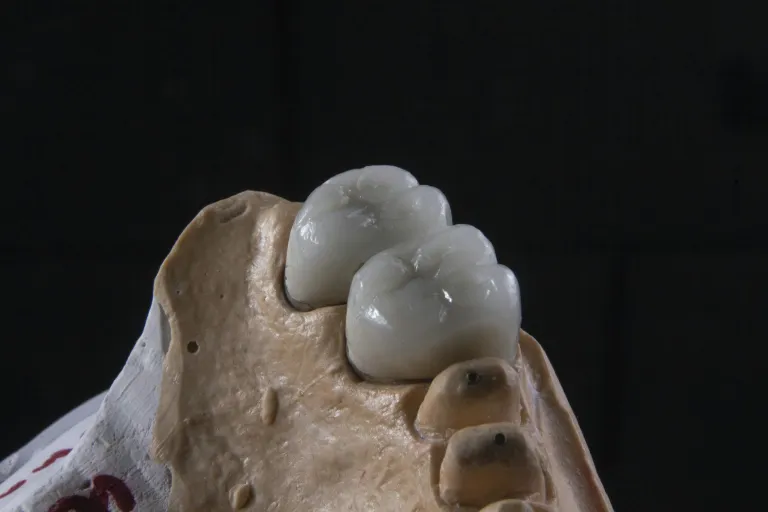
A fixed prosthesis is cemented or screwed in: you never take it out.
- A crown covers a damaged tooth whose root is healthy.
- A bridge replaces one or two teeth by resting on the neighbouring teeth, which are prepared to receive it.
- A crown or bridge on implants rests on implants placed in the bone, without touching the neighbouring teeth.
- A complete fixed prosthesis on implants replaces all the teeth in one jaw, screwed onto four to six implants.
Their main advantage is comfort: you forget about them, they do not move and you can chew normally. On the other hand, they need solid supports, teeth or implants.
Removable prostheses
A removable prosthesis comes out for cleaning and, often, at night.
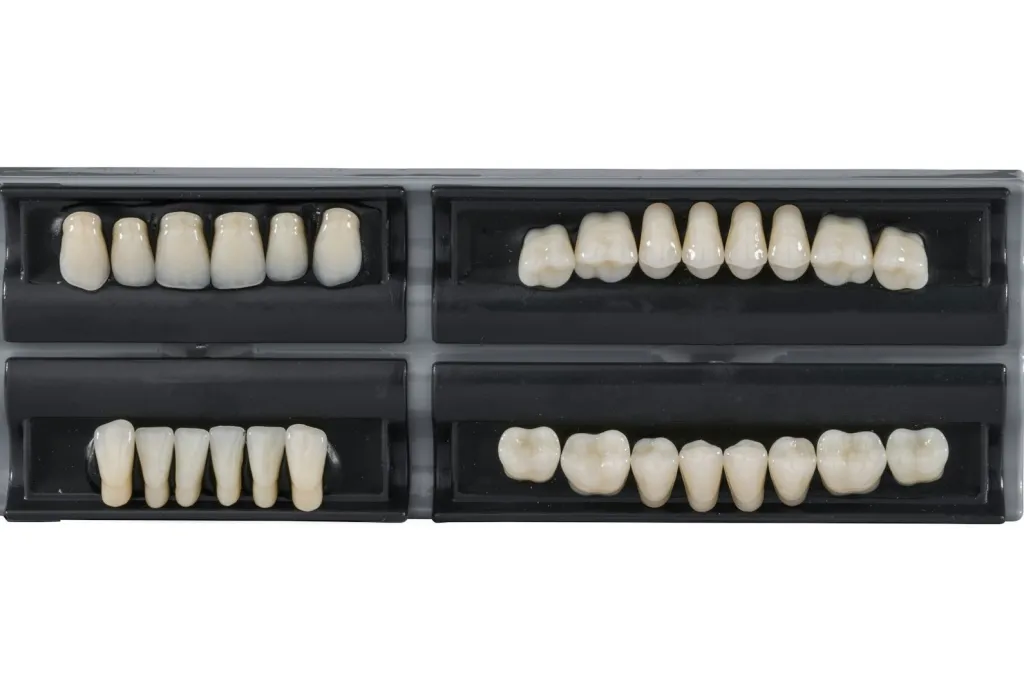
- A partial denture replaces a few teeth. It is held by clasps on the remaining teeth. It can be made of resin, or on a metal framework that is thinner and more stable.
- A complete denture, often simply called dentures, replaces all the teeth in one jaw. It is held by suction on the gum, better at the top than at the bottom.
No surgery is needed, and it is made in four to five appointments (impressions, try-in, fitting), over three to six weeks. It can be modified if another tooth is lost later.
In-between options on implants
When a lower complete denture moves, two implants may be enough to stabilise it: the denture clips onto them and no longer lifts when eating or speaking. It remains removable for cleaning. With more implants, a complete denture can even become fixed. These solutions combine some of the comfort of a fixed prosthesis with the easy cleaning of a removable one.
Fixed or removable dental prosthesis: the comparison table
| Fixed prosthesis | Removable prosthesis | Removable on implants | |
|---|---|---|---|
| Hold | Does not move | Clasps or suction | Clipped onto the implants |
| Surgery | Only if implants | None | Placement of two or more implants |
| Timescale | Two weeks to six months | Three to six weeks | Three to six months |
| Cleaning | In place, interdental brushes and floss | Out of the mouth | Out of the mouth and around the implants |
| Getting used to it | A few days | A few weeks | One to two weeks |
| If things change | Redone if an abutment tooth is lost | Can be modified if a tooth is lost | Can be modified |
The materials used
For fixed prostheses
- Ceramic reproduces the translucency of enamel; it is preferred for visible teeth.
- Zirconia, a very strong ceramic, suits crowns and bridges on back teeth, and increasingly front teeth too.
For removable prostheses
- Resin forms the pink base that imitates the gum and holds the artificial teeth; it is light and easy to adjust.
- A metal framework (stellite), thinner, makes a partial denture more stable and less bulky under the tongue and on the palate.
- The artificial teeth, in resin or composite, are chosen in a shade and shape that match your face.
Implants, for their part, are made of titanium, a metal that the bone tolerates very well.

The criteria that guide the choice
The number of missing teeth and their position. A single tooth is rarely replaced with a removable appliance; several teeth spread around the mouth, more often.
The condition of the remaining teeth. Fragile or loose teeth cope poorly with a bridge or clasps. They sometimes need treating first, or another solution should be considered.
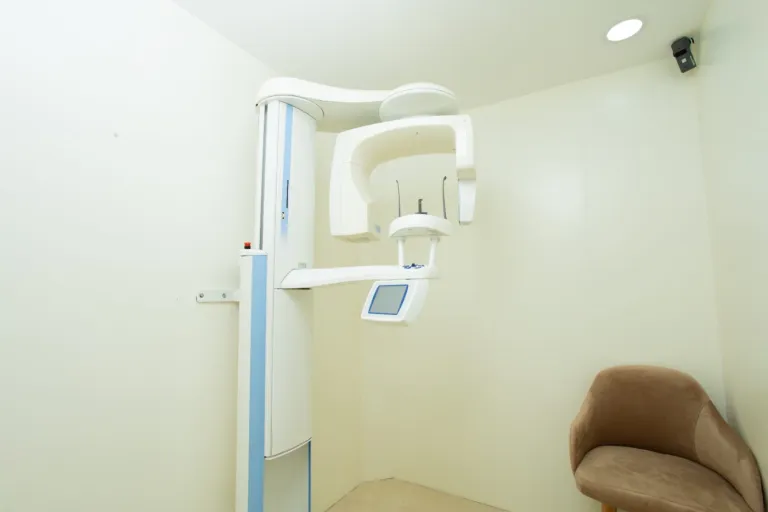
Bone volume. Implants need enough of it; the 3D X-ray measures it before any decision.
General health. Some medical situations make a solution without surgery preferable.
Upkeep. A removable prosthesis is brushed outside the mouth and must be relined over time, because the gum changes. A fixed prosthesis is cleaned in place, with interdental brushes and floss.
Budget and timetable. Implant-based solutions take several months and a larger investment. The Prices page gives indicative amounts; the price is explained after the examination.
There is no solution that suits everyone: the right option for you is the one that takes your mouth and your priorities into account.
The steps in making a prosthesis
- Consultation and assessment: examination of the remaining teeth, the gums and, if needed, the bone with a 3D X-ray; plan and price explained.
- Preliminary treatment: cavities, scale and clean, sometimes extraction of teeth that cannot be kept.
- Impressions: they record the shape of the teeth and gums, then the relationship between the two jaws.
- Try-in: the teeth are set up in wax or as a temporary; you approve the shade, shape and comfort before finishing.
- Fitting and adjustments: the prosthesis is fitted, then adjusted at check-up appointments in the following weeks.
On video: the removable partial denture
This educational animation shows how a removable partial denture replaces a few teeth and attaches to the remaining teeth.
Getting used to a new prosthesis
In the first few weeks, a removable prosthesis needs a period of adjustment: more saliva, difficulty speaking, small sore spots that the dentist corrects with adjustments. Start with soft food cut into small pieces, and chew on both sides at once. Reading aloud helps you regain natural speech. A fixed prosthesis settles in faster, often within a few days.
Looking after your prosthesis day to day
A fixed prosthesis
It is brushed in place, like natural teeth, twice a day. Under a bridge and around implants, special floss or an interdental brush removes the debris the toothbrush cannot reach. Regular check-ups and scale and cleans monitor the gums and abutment teeth.
A removable prosthesis
- Take it out after each meal to rinse it, and brush it every evening with a dedicated brush and mild soap, without abrasive toothpaste.
- Clean it over a basin filled with water: if you drop it, it will not break. The NHS gives the same advice.
- Brush your gums, your tongue and your remaining teeth too.
- At night, keep it dry or in a glass of water, according to the instructions you are given, and let your gums rest.
- Have its fit checked once a year: the gum and bone change, and a denture that moves must be relined.

Tooth loss remains common in older people: the World Health Organization counts it among the main oral conditions. Good hygiene of the remaining teeth is what keeps a prosthesis’s supports in place for as long as possible.
How the decision is made at the practice
At the first consultation, Dr Salhi examines the remaining teeth, the gums and, if needed, the bone with a 3D X-ray. He presents the options possible in your case, fixed or removable dental prosthesis, with their timescales and cost, and gives you a written plan. You take the time to decide.
To compare an implant-supported tooth and a bridge in detail, read our article implant or bridge. If you live in Europe, our article dentures in Morocco: organising your stays explains how to group appointments together. The Removable dentures, Crowns and bridges and Dental implants pages detail each dental prosthesis solution in Casablanca.
Frequently asked questions about dental prostheses
How long does a removable denture last?
Several years, provided its fit is checked. The gum and bone change: relining, which re-adapts the inside of the denture, is often needed over time, and the artificial teeth wear.
Can I sleep with my removable denture?
It is generally advised to take it out at night to let the gum rest and limit irritation. Dr Salhi tells you what suits your case, especially in the first few days.
Can a lower complete denture hold better?
Yes: two implants placed at the front of the jaw are often enough to stabilise it. The denture clips onto them and remains removable for cleaning.
Can I move from a removable to a fixed prosthesis?
It is possible if the bone allows it, by placing implants. The change is made in stages, and the removable denture can serve as a temporary during healing.
How many appointments does a removable denture take?
Four to five appointments as a rule, over three to six weeks: impressions, recording the relationship between the jaws, try-in, fitting, then adjustments.
Does a removable denture show?
The clasps of a partial denture may be visible on some teeth; their position is planned to make them as discreet as possible. The artificial teeth and gum are chosen to match your face.
What should I do if my denture hurts?
Do not let it injure the gum: book an adjustment, which is often quick. In the meantime, take it out for a few hours and rinse with warm salt water. Never file it down yourself.
This article gives general information; it does not replace a consultation.